
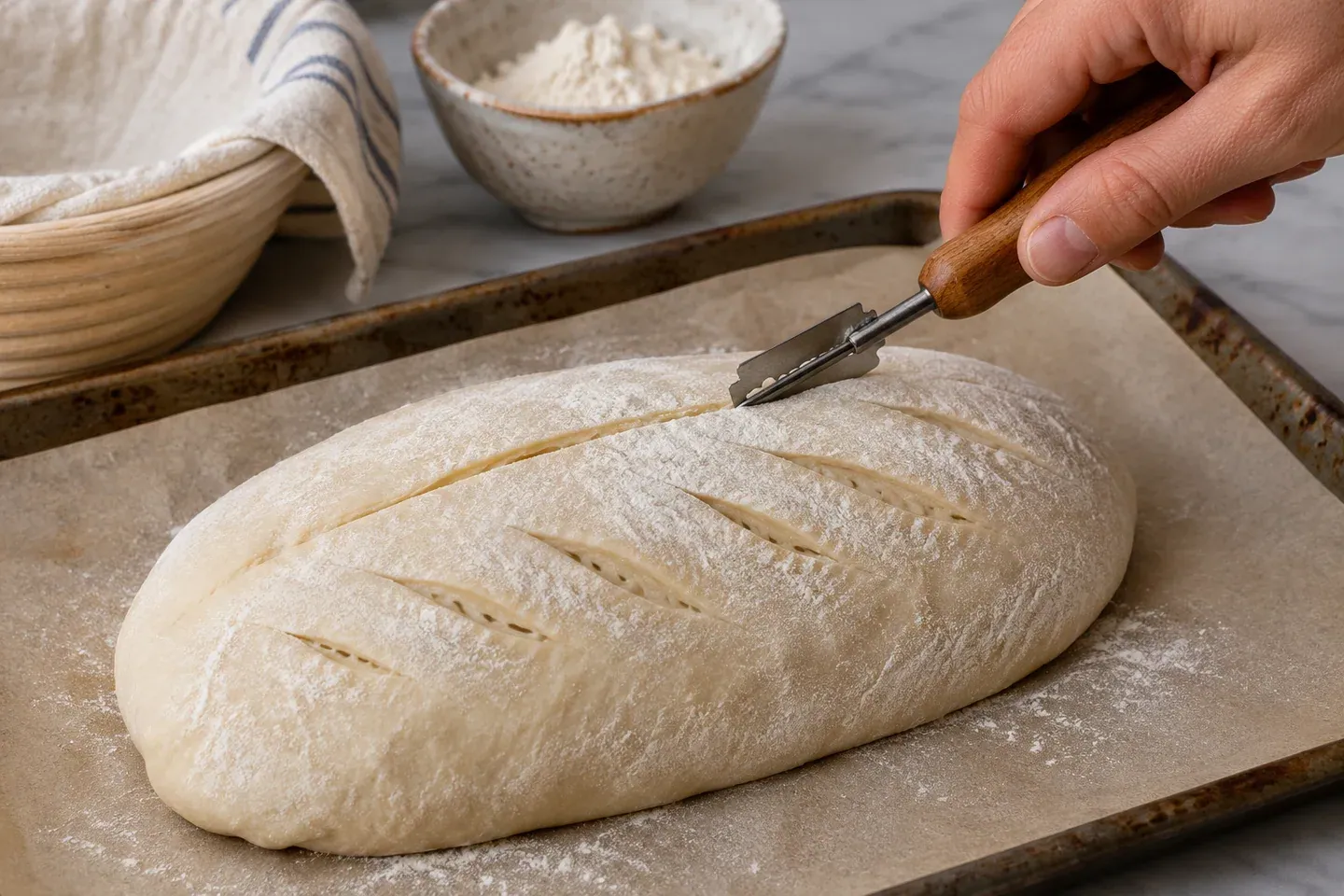
To score bread dough, make a deliberate expansion cut through the shaped loaf's surface shortly before baking. The cut gives the loaf a planned place to open as it expands. It does not create fermentation, strengthen a weak dough, or guarantee an ear. Begin with one simple cut and evaluate the baked result before adding decorative patterns.
Scoring suits particular bread styles, especially many lean freestanding wheat loaves. Some pan breads, rolls, and other breads follow different finishing instructions. Use the method for the dough and shape in your recipe rather than assuming that every loaf needs a razor pattern.
Separate expansion cuts from decoration
An expansion cut provides a useful weak point in the dough's outer layer. A decorative cut is usually shallower and primarily changes appearance. Combining many decorative cuts with an inadequate main opening can leave the loaf without a clear, effective expansion path.
For an early attempt, a single lengthwise cut on an oval loaf is easier to assess than a complicated design. You can see where it opened, how evenly the loaf expanded, and whether the surface tore elsewhere. Those observations become harder to interpret when many unrelated cuts compete.
The final appearance also depends on fermentation, shaping tension, flour, moisture, and baking conditions. If a score remains closed, do not immediately assume that the solution is a much deeper slash. First examine whether the dough and method were appropriate for the result you expected.
Choose a suitable tool and workspace
A bread lame holds a thin blade in a controlled position. A suitably sharp knife can work for some cuts, but a thick or dull blade may drag the surface and require more pressure. Choose equipment you can handle securely rather than trying to compensate for a poor edge with force.
Prepare the loaf on a stable transfer surface before bringing the blade near it. Keep fingers and loose cloth clear of the cutting path. Have an appropriate cover or storage place for the blade when you finish, and follow the tool's instructions for replacing or disposing of it.
Do not score while trying to balance dough over a hot pot. Plan the sequence so that shaping, scoring, and loading each have a controlled place in the workflow. Hot cookware and a sharp exposed edge are separate handling tasks that should not compete for attention.
If using parchment as a transfer sling, check its temperature rating and the recipe's setup. Keep it clear of heating elements. The scoring surface should support the dough without leaving you to catch a slipping loaf with the hand holding the blade.
Check whether the dough is ready for a cut
A shaped loaf needs enough surface tension and internal structure for an intentional opening to remain useful. A very slack mass can spread as soon as it is turned out, while a fragile overproofed loaf may deflate from handling. Scoring cannot reliably repair either condition.
Read the final proof using expansion, aeration, and resilience together. The proofing guide explains why a fingertip impression is one clue rather than a universal test. Do not deliberately underproof a loaf merely to make it feel easier to slash.
Cold dough can feel firmer and sometimes score more cleanly, but that does not justify adding an arbitrary refrigeration stage to any recipe. Use a method designed for cold proofing if that is the approach you want to learn. Temperature changes also alter fermentation and loading decisions.
Brush away only the flour that interferes with seeing the surface. A light dusting can be part of a recipe's handling, but a heavy flour coating can obscure where the cut enters. Avoid rubbing or pressing the loaf repeatedly while trying to make it look camera-ready.
Plan one clear expansion path
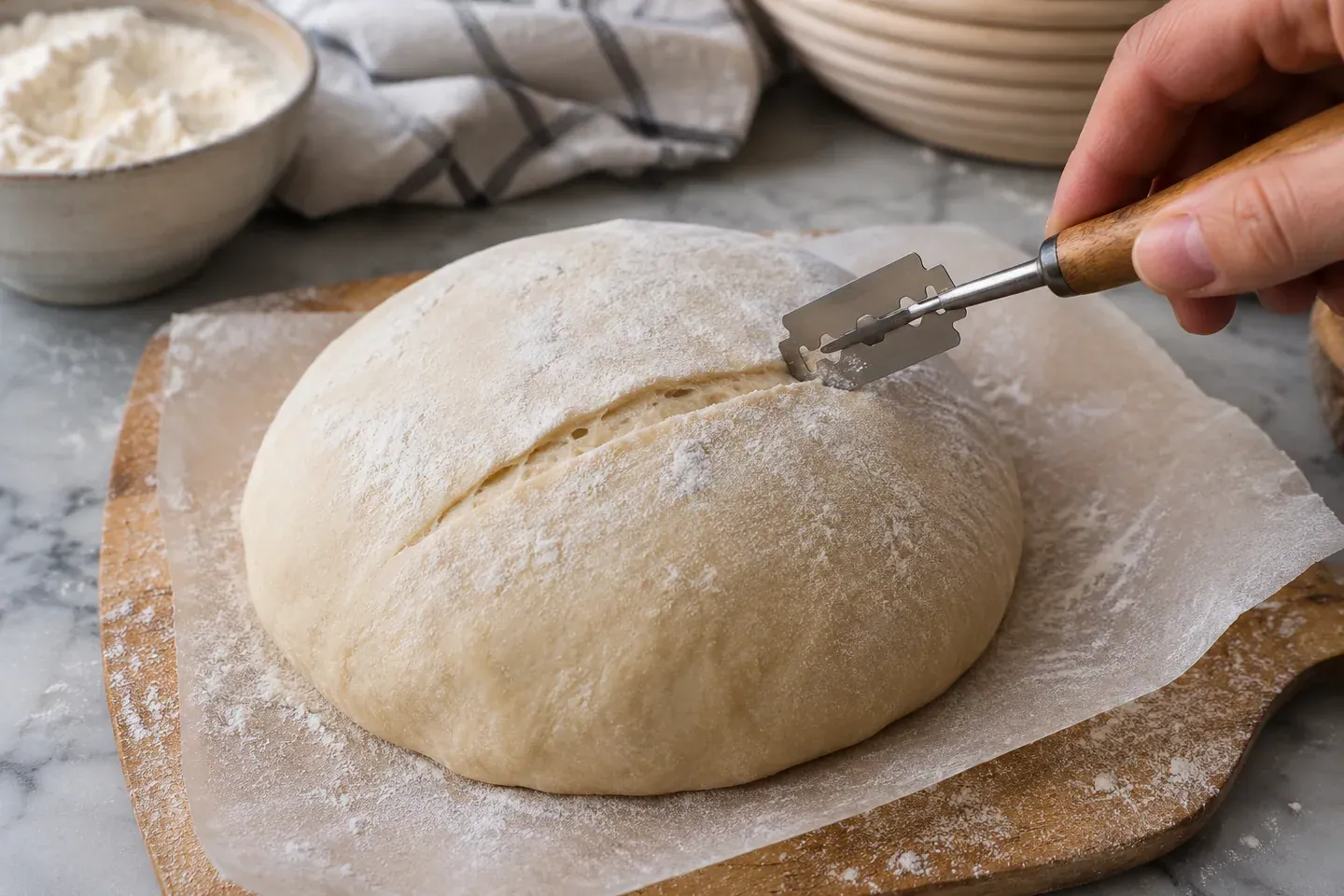
Look at the loaf's shape before cutting. A lengthwise opening on an oval loaf directs expansion differently from several symmetrical cuts on a round. Place the cut deliberately rather than changing direction midway because the surface moves.
Keep the path within a portion of the loaf where it can open without simply removing structural support at the base. A score running too close to a weak edge may not produce the same result as one placed appropriately across the upper surface. The goal is controlled expansion, not the largest possible wound.
For a baguette, a series of overlapping cuts is a separate skill from a single slash on a small oval loaf. Learn the simpler shape first if that is the bread you bake most often. Copying the number of cuts from a long baguette does not make a short loaf behave the same way.
Sketching a path mentally before touching the dough helps. Once you begin, use a smooth movement with enough confidence to avoid repeatedly sawing through the same area. If a small section did not open, evaluate that specific spot rather than automatically recutting the entire loaf.
Understand angle and depth
Blade angle changes the way the opening develops. A shallow angle can encourage a flap that peels back, while a more upright cut tends to open differently. King Arthur Baking's scoring guide describes a curved blade held around 30 degrees to the surface for one common expansion style.
Depth must be enough to pass through the taut outer layer without unnecessarily weakening the loaf. The same guide discusses approximately ¼–½ inch for that method, while warning against excessive depth. Treat this as a reference for its technique, not a universal instruction to cut every dough half an inch deep.
Judge the opening and the dough in front of you. Very different loaf sizes, hydrations, and surface conditions may not support the same treatment. A small loaf with a delicate skin can be harmed by copying the depth used on a much larger, firmer dough.
The aim is not to push harder. A sharp, suitable blade and a clear path usually require less force than a dull tool dragged through sticky dough. If the blade catches repeatedly, consider the edge, angle, surface condition, and dough readiness before adding pressure.
Make the cut, then load without delay
Hold the tool securely, keep your supporting hand outside the path, and make the planned movement. Avoid rushing simply because you want the cut to look decisive. Controlled movement is more useful than speed without a stable setup.
After scoring, transfer the loaf according to its baking method. A long delay can allow a soft dough to spread, while the oven setup may also change if a hot vessel is left open unnecessarily. Have the loading equipment ready before you start.
Use only steam and covered-vessel methods compatible with your cookware and appliance. Scoring and steam often appear together in artisan recipes, but that does not make improvised water pouring safe. Follow the selected method rather than inventing a steam system around hot glass or exposed heating elements.
Read the baked opening
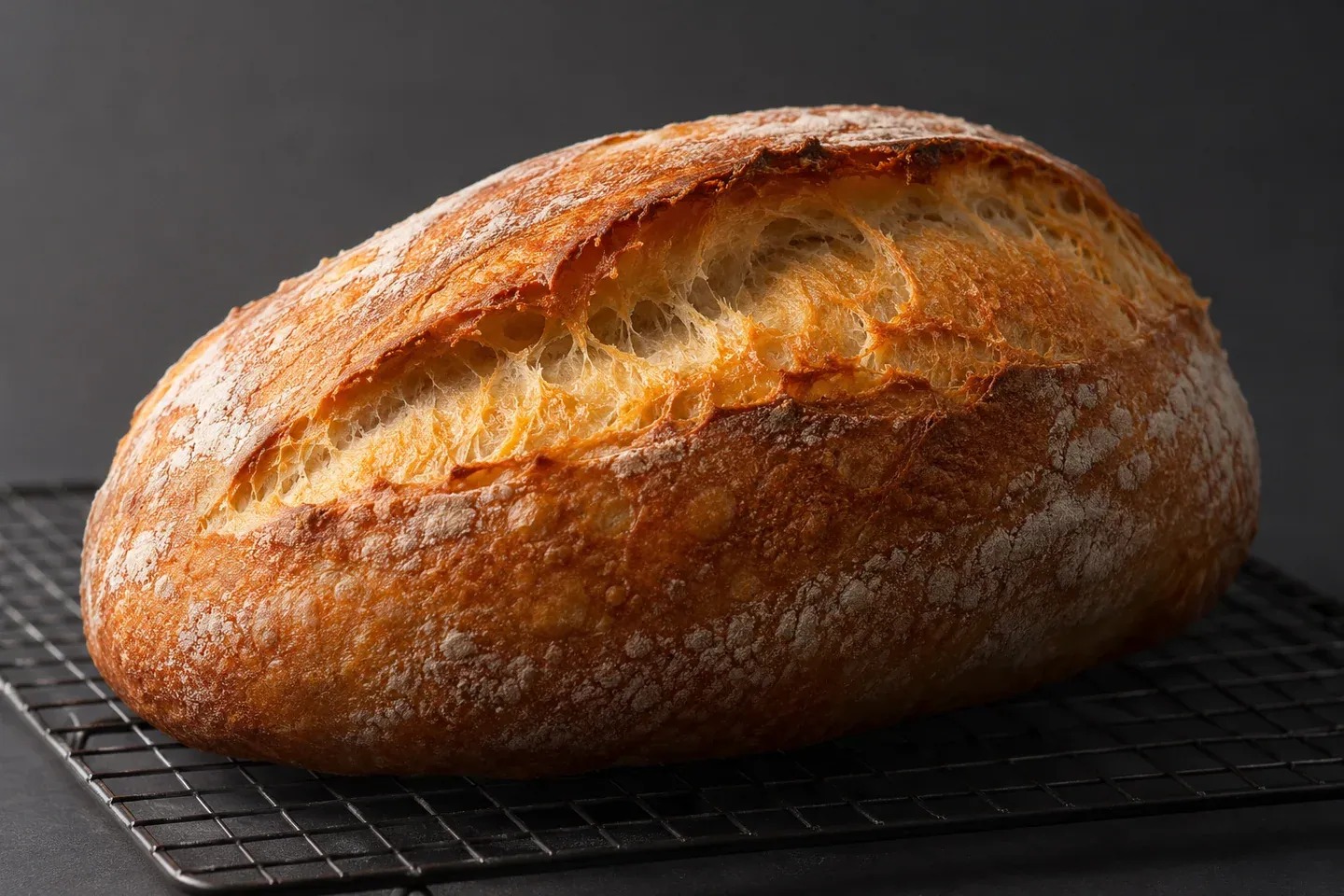
A score that opens along its intended path shows that the cut participated in expansion. It does not prove that every earlier stage was perfect. Examine the loaf's height, base, sides, and cooled crumb as well as the appearance of the opening.
If tearing occurs elsewhere, review cut placement, depth, shaping, and proofing. A weak seam underneath can also open. Do not assign the cause solely to the top cut without considering the shape that entered the oven.
If the loaf spreads flat, an overly aggressive cut may be one factor, but a weak or overfermented dough can also contribute. The dense bread troubleshooting guide and proofing notes help distinguish a scoring issue from a broader structure problem.
An ear is an appearance feature rather than a requirement for good bread. A loaf can have pleasant flavor and a useful crumb without a dramatic lifted ridge. Prioritize a bread you enjoy eating before trying to reproduce a particular photographic shape.
Improve one variable at a time
Use the same dough formula and loaf shape for a few attempts. Record proofing observations, whether the dough was warm or cold, the approximate cut path, and the result after baking. A photograph of the cut before loading can help connect intention with outcome.
Change one clear factor next time. You might adjust placement slightly while keeping the angle and proofing method the same. Changing the entire recipe, fermentation schedule, shaping, and blade angle at once may produce a different loaf without explaining why.
Once a simple expansion cut works reliably for your chosen method, add modest decoration if desired. Keep the main opening purposeful. Decorative complexity should follow control, not hide the absence of it.
Scoring questions
Must every loaf be scored?
No. Follow the bread's method and style. Some recipes use an intentional seam opening, a pan-supported surface, or another finish. Scoring is a tool for particular results rather than a universal definition of proper bread making.
Should I score after the loaf is in a hot pot?
Plan a safer supported scoring stage before loading whenever the method allows it. Do not reach around exposed hot metal with an uncovered blade simply to copy a demonstration. Follow your vessel's instructions and choose a workflow you can control.
Why does my blade drag?
Check the blade's condition, how you hold it, the surface's stickiness, and the dough's readiness. Excess pressure can worsen tearing. A short review of those factors is more useful than repeatedly sawing through the same soft area.