
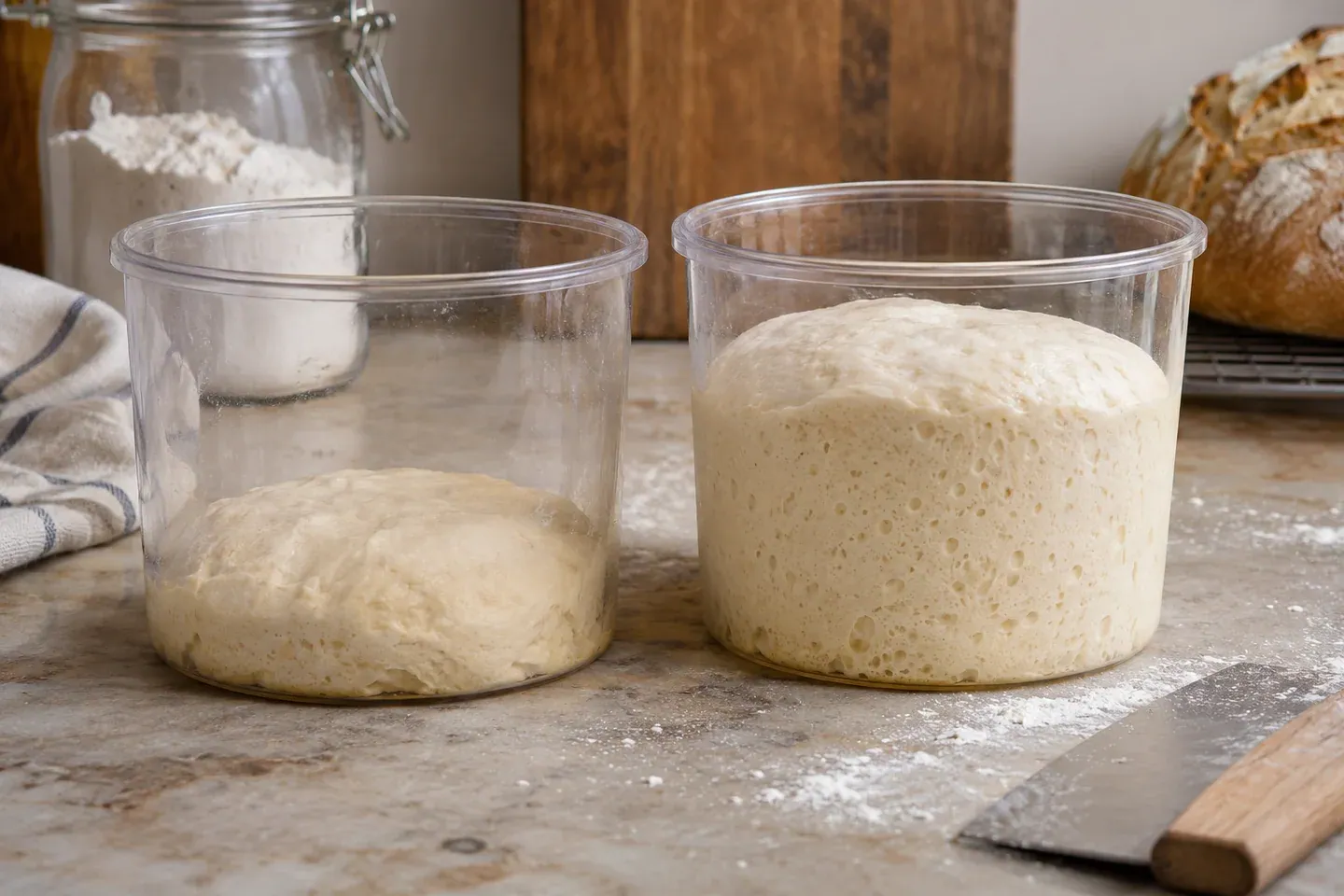
Bread dough not rising can mean inactive yeast, an unreliable starter, a dough that is much colder than expected, or a formula whose structure does not retain gas well. It can also mean that the dough rose and fell while you were away. Establish which situation you have before adding yeast, flour, sugar, or heat.
This guide diagnoses raw dough during fermentation. A finished dense loaf needs a broader review that includes baking and cooling, covered in the dense bread guide. Here the immediate goal is to separate normal slow progress from a process that is not working as intended.
Confirm that no rise has actually occurred
Look for evidence above the current dough level. Dried marks or residue on a container can indicate an earlier peak. A dough that expanded and collapsed may now look flat, but treating it as completely inactive leads to the wrong correction.
Consider the container's shape. In a broad bowl, dough can spread outward and make changes in volume difficult to estimate. A narrow, straight-sided container with a starting mark makes the next attempt easier to observe. The starting reference should be recorded after mixing and any relevant initial handling.
Examine the dough gently for bubbles and a lighter feel. Do not repeatedly squeeze out gas while checking for it. If there is modest but steady development, you may be dealing with a slow schedule rather than dead leavening. That distinction matters before making any addition.
Identify the leavener and intended schedule
Check the ingredient list. Is the recipe using commercial instant yeast, active dry yeast, a quick-rise product, or sourdough starter? Those are not interchangeable descriptions of one identical timetable. A recipe with very little yeast may intentionally ferment overnight.
The no-knead artisan method, for example, uses a much smaller yeast quantity than a faster everyday loaf. Judging it after the first hour as if it were a quick dinner-roll dough would create a false diagnosis.
For sourdough, the starter's feeding history matters. A new culture that bubbled early or a long-refrigerated starter without restored activity may not raise dough as expected. Review the starter feeding guide before treating the dough itself as the only problem.
Also confirm that the leavener was actually added. A missed small ingredient is easy to overlook when mixing several bowls. Before researching a complicated fermentation problem, review the measured ingredients and what remains on the counter.
Check temperature without forcing it
Cold flour, milk, water, and bowls can create a cool dough even when the room feels comfortable. The dough warms gradually, not instantly. If it is cool and showing some activity, additional time under appropriate recipe conditions may be more useful than a sudden burst of heat.
A very warm ingredient can create a different problem. Yeast is a living organism, and excessive heat can damage it. Follow the temperature directions for the product and mixing method rather than assuming that water comfortable for one purpose is correct for every yeast preparation.
Do not place the bowl on a hot radiator, above an active heating element, or in an oven that could be accidentally switched on. The bottom can become much hotter than the visible surface. A stable, moderate environment gives a clearer observation than an improvised extreme warm spot.
If you use a thermometer, choose an instrument appropriate to the measurement. Record the dough's condition rather than inventing a precise target for an unfamiliar formula. The rise-timing guide explains how ingredient and room conditions interact with the recipe's estimates.
Verify commercial yeast carefully
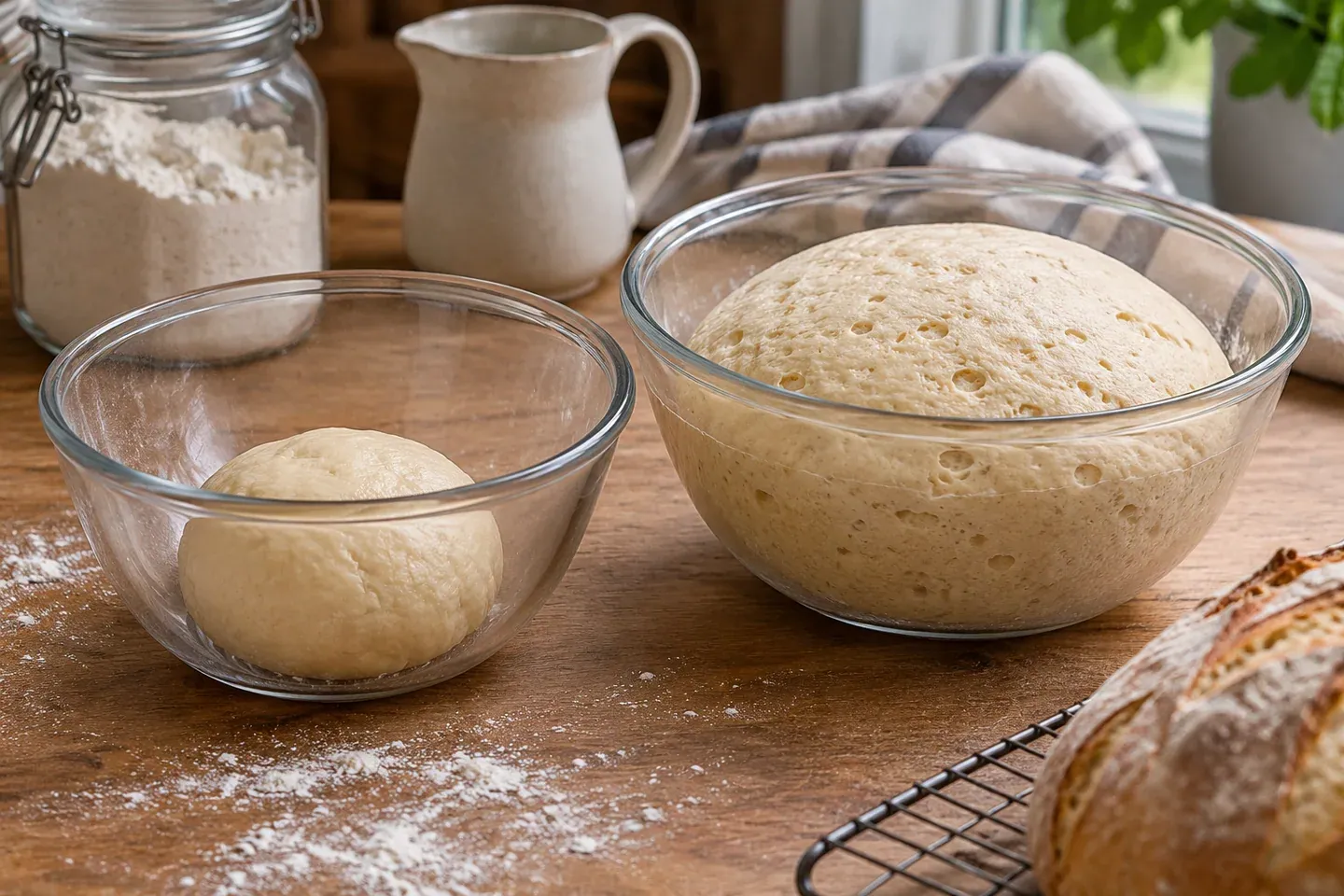
Check the package date, whether it was opened, and how it was stored. Follow the manufacturer's instructions after opening. A container exposed repeatedly to unsuitable heat or moisture may not behave like a fresh package, even if its name matches the recipe.
If a separate activity test is appropriate, use the specific product's recommended method. Red Star's active dry yeast instructions describe a warm-water-and-sugar test for that product. Do not assume that a loosely improvised cup of water provides the same information.
The method used to add yeast also matters. Some products can be blended with dry ingredients; package and recipe instructions should guide you. “All active dry yeast must always be handled exactly one way” is too broad a rule for the products available today.
If you prepare a yeast solution for the recipe, count its water within the formula's total liquid. Adding the full liquid again can create a much wetter dough. A yeast check should reduce uncertainty, not introduce an unmeasured change that makes the resulting dough harder to evaluate.
Review the ingredient balance
Excessive flour can make a dough firm and limit the expansion you expected. A cup-measuring difference or repeated counter dusting may matter more than you realize. The flour-measuring guide provides a consistent starting method for your next attempt.
Salt and sugar also deserve a quantity check. Normal recipe amounts have intended functions, but a weighing or unit error can change the environment substantially. Do not remove salt automatically or add a large spoonful of sugar on the assumption that every slow dough is hungry.
Rich doughs need expectations suited to their formula. Butter, eggs, milk, and substantial sugar create a different system from lean flour-and-water dough. A cool enriched mixture may need more patient observation, while a recipe designed for a particular yeast product should retain that context.
Check any substitutions. Replacing wheat flour with a flour that does not build a comparable structure can change how gas is retained. The dough may be fermenting without achieving the height you associate with a wheat loaf. More yeast cannot replace every structural role of the original flour.
Distinguish gas production from gas retention
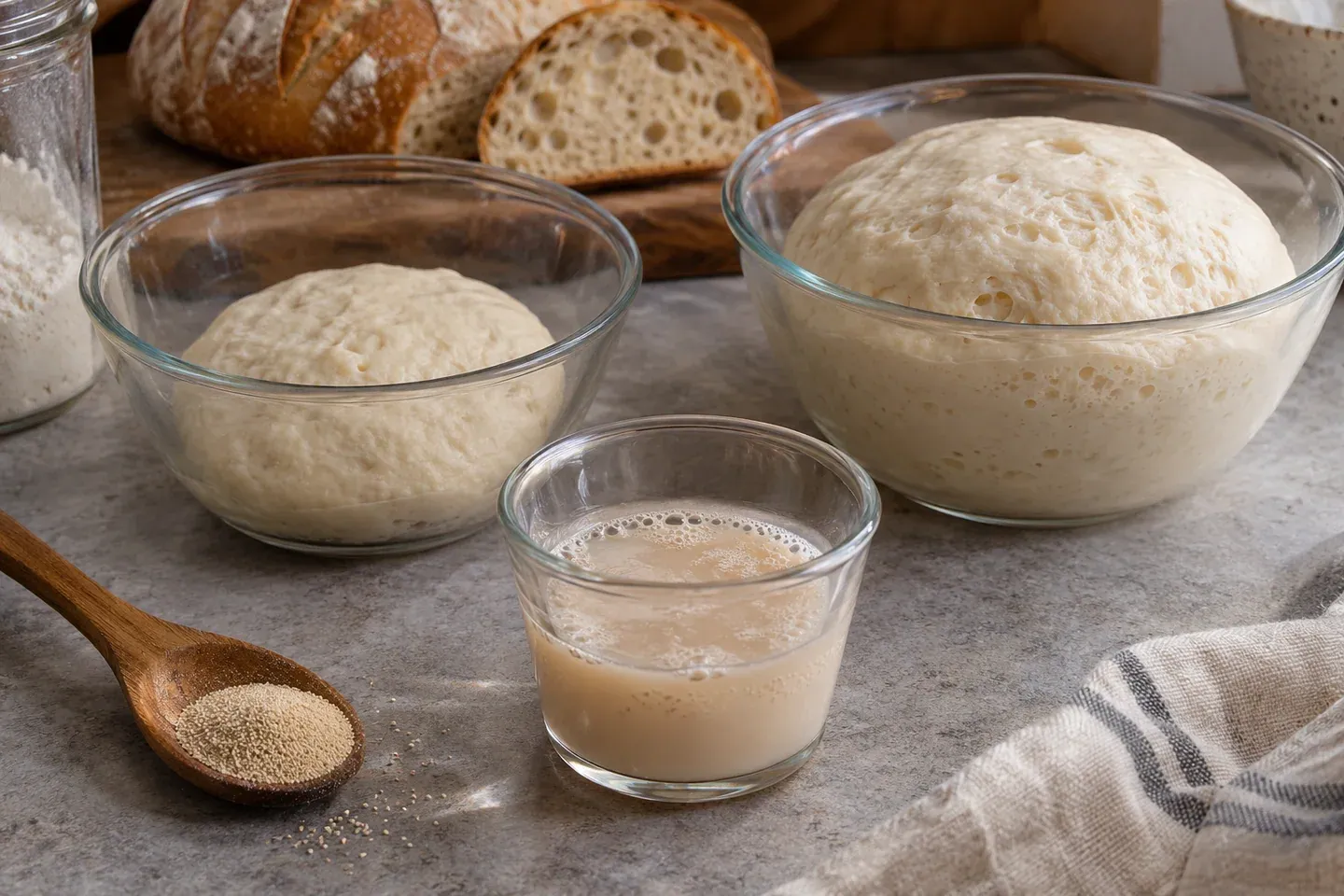
Do you see bubbles but little sustained lift? Consider whether the dough has enough development to hold them. Mixing, kneading, folds, and flour choice contribute to that structure. An underdeveloped mass and inactive yeast are different problems, even if both produce a low loaf.
Look back at the mixture before its rise. Was it cohesive and reasonably stretchable, or rough and prone to immediate tearing? Did the method call for folds that were skipped? Those observations may explain why fermentation did not translate into the expected volume.
At the other extreme, a dough that fermented too long may lose useful strength. If it rose and then slumped, further waiting can worsen the condition. Do not keep adding time because the current level is lower than the height you hoped to see.
Use a short diagnostic sequence
| Question | What to look for | Next useful action |
|---|---|---|
| Did it rise earlier? | Residue above the current level, a sunken surface | Review timing and structural weakening |
| Is it slowly developing? | Modest ongoing expansion and aeration | Observe under the recipe's appropriate conditions |
| Is the leavener dependable? | Product storage history or starter feeding performance | Check the leavener before changing the formula |
| Is the formula intact? | Correct units, quantities, and substitutions | Identify measurement errors rather than guessing additions |
| Is gas being retained? | Bubbles with weak or spreading structure | Review dough development and flour choice |
Work through the sequence before making several corrections. A record of one clear change helps the next attempt. A dough given extra flour, sugar, yeast, and heat simultaneously may change without teaching you which issue was responsible.
Decide whether continuing is appropriate
A cool dough with active fermentation may simply need more time within the recipe's intended process. Keep observing volume and condition. The timer is an estimate, but that does not mean you should abandon all time and temperature control indefinitely.
If the yeast was omitted or clearly inactive, the right correction depends on the formula and how the dough has been held. This article does not provide a universal rescue instruction for every mixture, especially those containing perishable ingredients. A fresh, properly measured attempt may be the clearer choice.
Do not assume that frying, toasting, or changing the bread's name makes any poorly stored dough suitable to eat. Handling history matters separately from whether a dough can be made to rise. Avoid tasting raw dough during diagnosis and follow FDA flour-handling guidance.
Prevent the same uncertainty next time
Choose a simple formula and keep the measurements consistent. Record the leavener, mixing time, approximate conditions, and actual expansion. Mark the starting level and check before the recipe's estimated endpoint so that an earlier peak is not missed.
Prepare the oven before the final proof is finished, and avoid a schedule that requires leaving the dough unattended through its expected readiness window. A little buffer in your day often does more for consistency than a new piece of equipment.
If you make a substitution, record it clearly. Comparing one altered variable is useful; comparing two completely different recipes does not tell you why the first dough failed. The goal is a dependable routine that lets you recognize normal behavior and spot a genuine problem earlier.
Common questions
Does salt always kill yeast on contact?
That is too simple a description of a mixed bread dough. Follow the formula's amount and mixing method. A normal measured ingredient is not the same as a major concentration or unit error, so diagnose the actual quantity rather than removing salt by default.
Should I keep waiting until something happens?
Only when the dough's conditions and observed development make that appropriate. An inactive leavener, excessive fermentation, or unsuitable storage is not corrected by unlimited waiting. Establish the likely situation first.
Can one successful test guarantee a good loaf?
No. Active yeast or starter is one requirement. Measuring, structure, shaping, proofing, and baking still contribute. Use the test to answer its specific question, then follow the rest of the method carefully.