
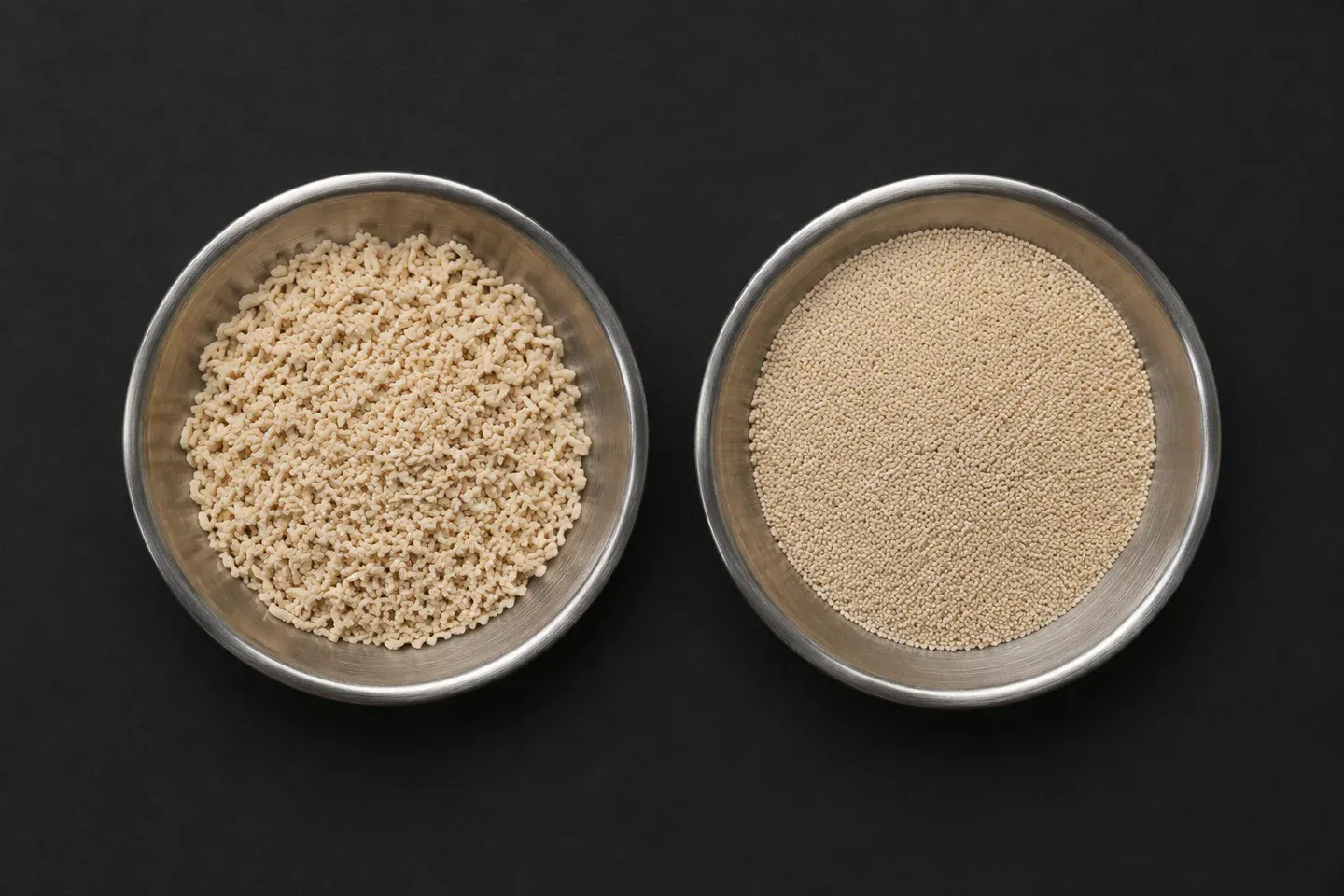
Active dry yeast vs instant yeast is usually a choice about preparation, initial speed, and the recipe's intended method. Both are commercial bread yeasts, and many handmade doughs can use either when the manufacturer permits the substitution. Instant yeast generally starts more readily, while active dry may require more patient observation at the beginning.
The practical first choice is the yeast named in the recipe. If you substitute, read the actual product directions and watch the dough rather than assuming the original timetable will remain exact. A one-for-one ingredient substitution does not mean that every dough rises at an identical rate.
What each product is
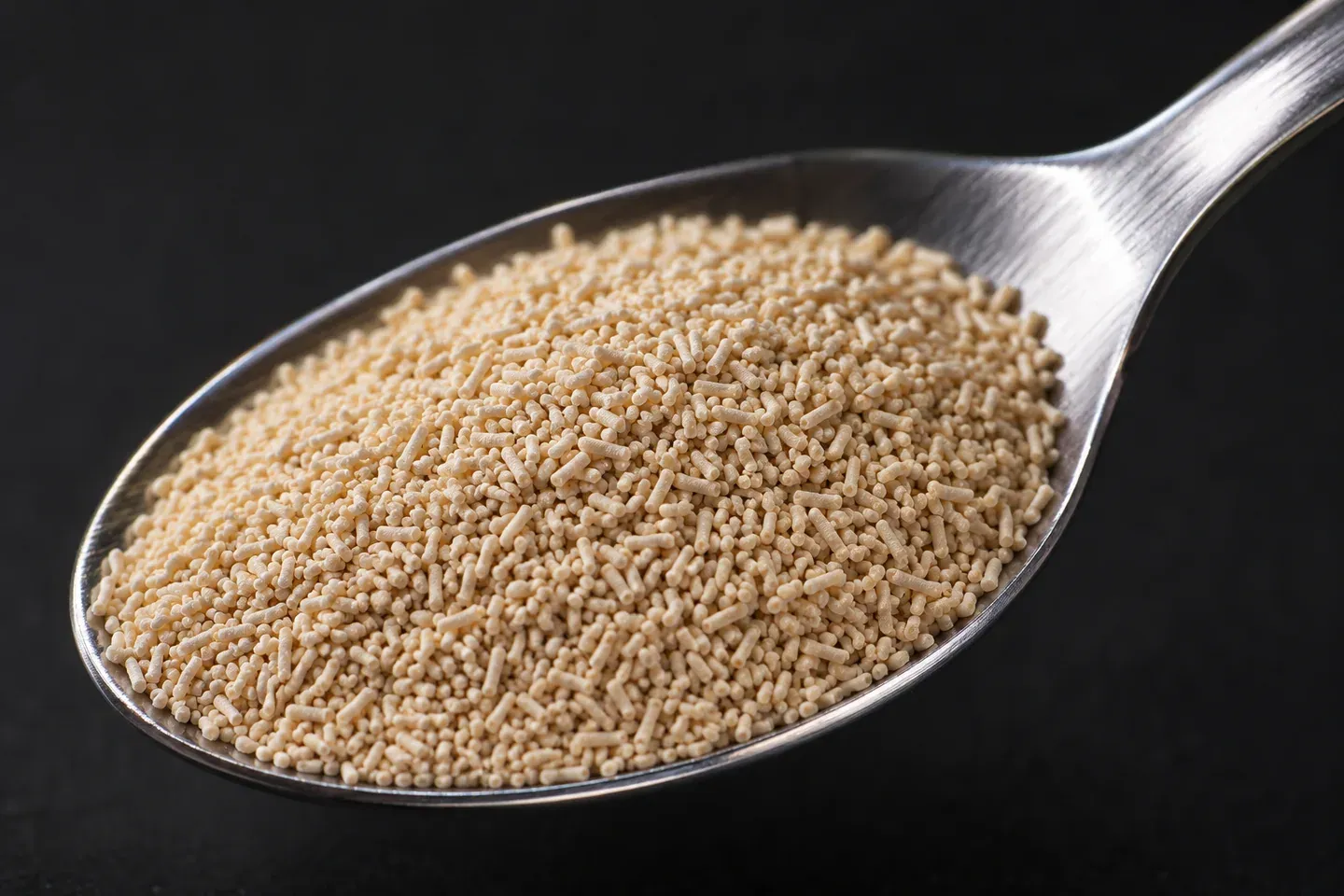
Active dry yeast is sold as dry granules containing yeast cells. Instant yeast is processed into a form that disperses readily in dough and is commonly blended with dry ingredients. Different manufacturers and product lines can have their own recommended mixing and liquid-temperature methods.
Do not reduce the comparison to “one is alive and the other is not.” Both are intended to provide active leavening when stored and used appropriately. A poorly stored package of either type can disappoint, while a fresh, correctly handled product can work well in a suitable recipe.
The labels around them also matter. Quick-rise, bread-machine, sweet-dough, and sourdough-flavored products may carry additional instructions or represent a particular formulation. Read the full label rather than treating every container with the word yeast as an identical ingredient.
Compare the two before changing a recipe
| Question | Active dry yeast | Instant yeast |
|---|---|---|
| Typical initial behavior | Often more moderate at the start | Often begins acting more quickly |
| Mixing | Follow product instructions; some methods use a separate hydration step | Commonly mixed with dry ingredients, subject to product directions |
| Handmade-dough substitution | May be interchangeable where the manufacturer permits | May be interchangeable where the manufacturer permits |
| Main practical adjustment | Allow the dough's development to guide timing | Avoid assuming faster always means better |
| Storage concern | Protect viability from unsuitable heat and moisture | Protect viability from unsuitable heat and moisture |
The table describes ordinary commercial products generally. It does not override a particular package, bread-machine program, or recipe designed around a specific rapid process. Those instructions are especially important when the schedule is fixed rather than judged by hand.
Follow current product guidance on substitution
Red Star's yeast FAQ permits its active dry and instant products to be used one for one in traditional hand- or stand-mixed dough methods, with attention to their different rate of action. That is a useful manufacturer statement, not proof that every yeast sold worldwide has identical instructions.
For a recipe using 6 grams instant yeast, a 1:1 substitution under appropriate product guidance means 6 grams active dry yeast. It does not mean adding an arbitrary extra packet. Keep the formula's flour, water, salt, and other ingredients unchanged so that you can observe the yeast substitution clearly.
Check whether the substitution changes preparation. If a product directs you to hydrate it separately, account for that water within the recipe's total liquid. Adding a yeast solution and then the full liquid again changes hydration, which can make a yeast comparison look like a dough-consistency problem.
If the recipe or manufacturer gives a different conversion for a specific product, use that context. Do not combine a ratio from one brand with a water-temperature method from another and assume the resulting method was validated as a whole.
Understand rehydration without making it a universal rule
Older advice often presents active dry yeast as requiring a separate proofing step in every situation. Current product guidance can be more flexible. Some active dry products can be incorporated with dry ingredients, while a recipe or package may still direct a warm-liquid method.
The package's method should decide the liquid temperature, not the idea that hotter water always works better. Excessive heat can damage yeast. A temperature suitable for one mixing sequence is not automatically appropriate when yeast directly contacts the liquid in another sequence.
For a separate activity check, follow the manufacturer's complete procedure. Red Star's active dry product page gives instructions for its own yeast, including how the test liquid should be handled in a recipe. An improvised cup of water is not necessarily an equivalent test.
Do not mistake bubbles stirred into a mixture for proof of later fermentation. Observe the response over the specified method, and distinguish a test of yeast activity from the full task of making bread. A successful test cannot guarantee that measuring, development, and proofing will also be correct.
Plan for dough development, not a race
Instant yeast's faster start can be convenient, but a faster rise is not always the objective. An overnight dough intentionally uses a long schedule and a small amount of yeast. Adding more of a fast product changes that design instead of simply improving it.
Active dry may take longer to show the same early expansion in a handmade dough. Continue judging the recipe's volume and texture targets. If you bake a still-compact dough merely because the original timer finished, the substitution may be blamed for a timing decision it did not require.
The rise-timing guide explains how dough temperature, yeast quantity, and enrichment affect the schedule. Record what you used and what you observed rather than labeling one yeast universally reliable and the other unreliable after a single attempt.
For comparison, repeat the same simple recipe with the same flour, pan, and measuring method. A change of yeast alongside a new flour blend and a warmer room does not isolate the yeast's effect. Clear observations make a more useful next choice than brand loyalty based on an uncontrolled comparison.
Pay attention to fixed-cycle methods
A bread machine follows a program with limited time for mixing, rising, and baking. That differs from a handmade dough whose baker can observe and adjust the schedule. Use the machine and yeast instructions for the chosen program instead of importing a general handmade-dough rule.
Quick-rise methods may also be designed around a particular product and number of rises. Do not force that method onto a recipe that expects a long first fermentation and a separate final proof. The complete process matters, not only the ingredient name.
Sweet doughs introduce another consideration. A formula with substantial sugar may be designed for a yeast suited to that environment. Read the recipe and manufacturer guidance rather than increasing a standard yeast quantity repeatedly when the dough is slow.
These are reasons to choose carefully, not reasons that a home baker needs every yeast product available. Most households can begin with the product specified for the bread they want to repeat and expand their choices only when a new method requires it.
Check quantity and packaging units
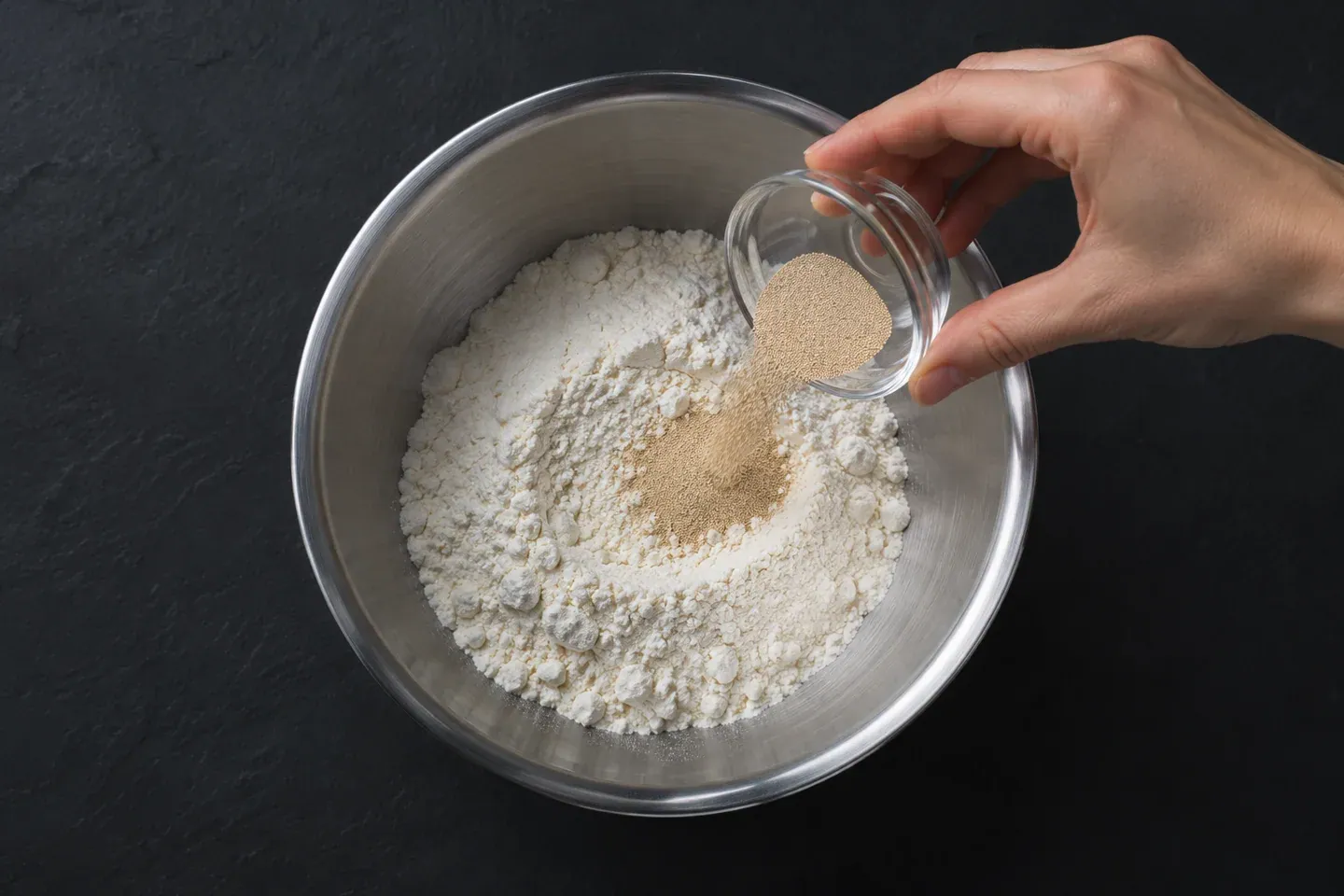
A standard US packet of many commercial dry yeasts contains 7 grams, commonly described as 2¼ teaspoons. Check the actual packet rather than assuming every sachet in every country contains that amount. Recipes written in grams make this distinction easier.
Small quantities need appropriate measuring. A kitchen scale that handles 500 grams flour comfortably may be less useful for a fraction of a gram of yeast. For a very long-fermentation formula, a suitable small measure or more precise scale can matter more than the difference between two ordinary yeast names.
Never treat an entire jar as a single unit called for by a packet recipe. Read the weight and recipe amount carefully. A major quantity error can produce a rapid rise and later collapse, which is a different problem from choosing the supposedly wrong yeast type.
Store the yeast you choose properly
Follow the package's storage instructions before and after opening. Protect the product from unsuitable heat and moisture, close containers as directed, and note the opening date if it helps your routine. Storage history can explain a change in activity even when the recipe has not changed.
Use clean, dry utensils when measuring. Do not dip a wet spoon into a container and then return it to storage. If the yeast's condition is doubtful, review the product's recommended activity check rather than compensating blindly with a much larger quantity.
If dough does not rise, consider temperature, ingredients, and development as well as yeast. The dough troubleshooting guide separates slow progress, inactive leavening, and gas-retention problems so that the next correction addresses the right stage.
Which should you use?
Use the recipe's specified product for an unfamiliar bread, especially for a fixed program or rapid method. For a flexible handmade dough, use a permitted substitution if necessary and judge the dough's progress. Keep the package instructions available until the mixing method is clear.
The better choice is the one that fits the recipe and is fresh, correctly measured, and appropriately handled. Neither product removes the need for accurate flour measurement or a properly observed final proof. Familiarity with one dependable method is more useful than continually switching products without notes.
Yeast questions
Does bread dough need added sugar for yeast to work?
Many lean bread formulas ferment without added table sugar. Follow the recipe rather than adding sugar automatically to every slow dough. A formula's flour, fermentation time, and other conditions already form part of its design.
Can I substitute sourdough starter directly?
Not with a simple dry-yeast weight exchange. Starter also contributes flour and water and changes the fermentation method. Use a sourdough formula or a deliberate conversion rather than replacing a teaspoon of dry yeast with an arbitrary spoonful of starter.