
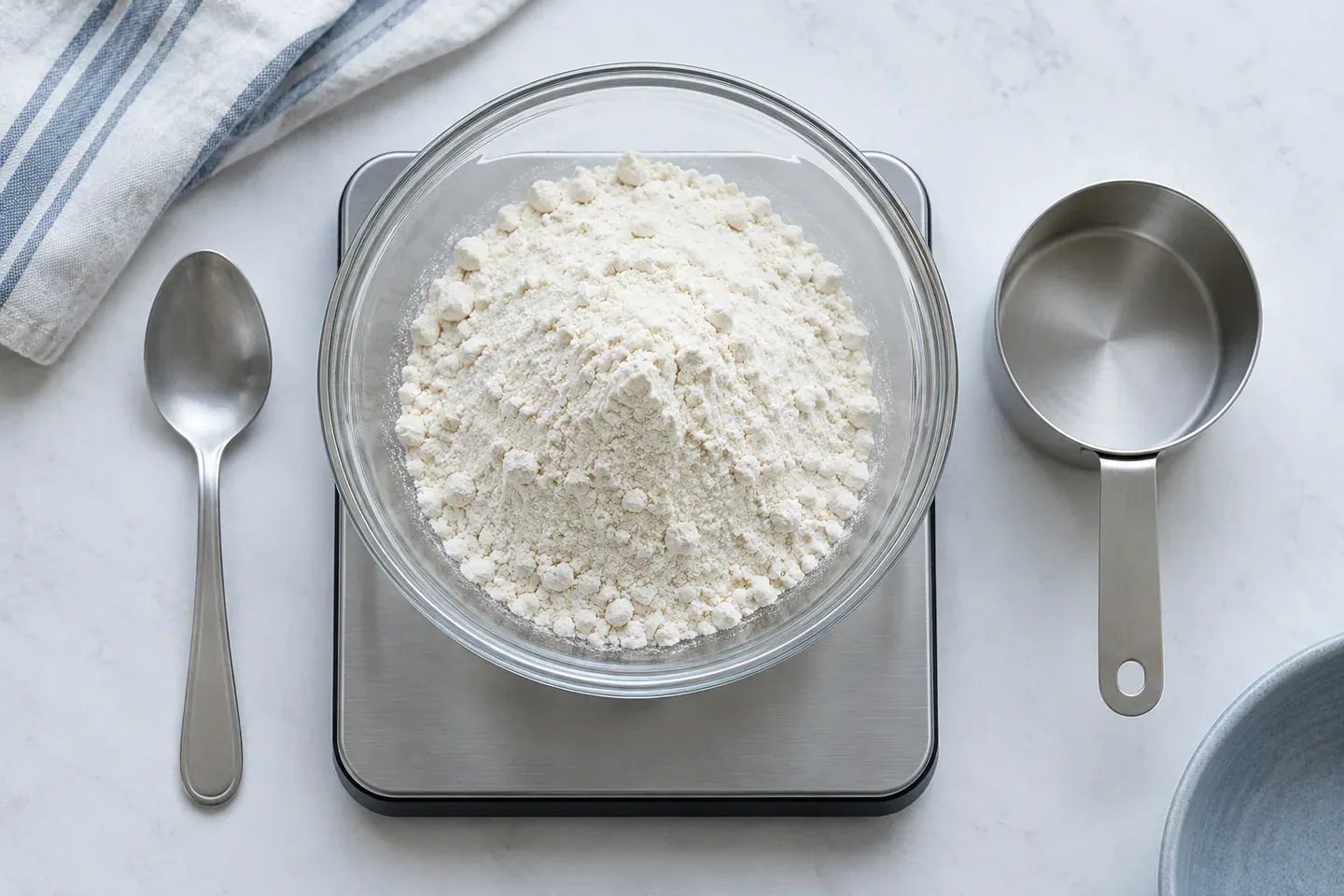
The most reliable way to measure flour for bread is to weigh it. Flour contains air, and its packing changes as you scoop, shake, or press it into a cup. A scale measures the amount of flour rather than the space that flour happens to occupy. If you do not have a scale, use the recipe's stated cup method consistently and avoid packing the flour down.
Accurate measuring matters because flour controls the balance of a bread dough. Extra flour changes hydration, makes mixing harder, and can produce a tighter crumb. Too little flour can make a familiar recipe unexpectedly loose. Before changing yeast quantities or buying a different pan, check whether the flour measurement itself explains the dough you are seeing.
Why the same cup can hold different amounts
Imagine filling a cup with loose flour, then tapping the cup firmly against the counter. The flour settles and leaves space at the top. If you refill that space, the cup still looks level, but it now contains more flour. Nothing about the cup's capacity changed; the arrangement of the flour did.
The same effect happens less obviously when you push the cup through a bag. That action can compress flour into the cup instead of allowing it to fall in loosely. A recipe written using a spoon-and-level method may therefore produce a stiffer dough when another baker scoops directly from a packed container.
There is no universal gram weight for every cup of every flour. Flour type, the measuring method, and the recipe developer's convention all matter. Use the gram quantity supplied with your particular recipe. Do not replace it with a conversion from an unrelated chart simply because that chart is familiar.
Set up the scale before opening the flour
Place the scale on a firm, level surface. A soft towel underneath can interfere with some scales, and a container pressed against a wall can prevent a free reading. Make sure the bowl fits securely and does not hide the display. Use the gram setting rather than assuming the last-used unit is correct.
Put the empty bowl on the scale and press tare or zero. The display should return to zero with the bowl still in place. Add flour gradually until you approach the target, then use smaller spoonfuls. If you overshoot, remove some before adding the next ingredient.
For a recipe calling for 400 grams flour, the target is the flour alone. If the bowl weighs 260 grams and you forget to tare, a displayed 400 grams would leave only 140 grams flour inside. That is a large error, but it is easy to miss when you are concentrating on the number instead of the setup.
Check the scale's capacity when mixing large batches. The bowl and all its contents count toward the maximum load, even after you tare. A small scale may work well for a single loaf but struggle with a heavy ceramic bowl full of several kilograms of dough ingredients.
Weigh flour separately when accuracy matters
Adding ingredients to one bowl is convenient, but it requires care. Flour overshot by 15 grams can be removed easily when it is alone. Once salt and yeast have been added, removing a spoonful of the mixture does not reliably remove only flour. For a first attempt, separate weighing can make mistakes easier to correct.
If you do use the one-bowl method, add flour first, record the amount, and tare before adding the next ingredient. Pause to confirm that each displayed number belongs to the ingredient currently being added. Do not automatically reset the scale while still pouring.
Very small ingredients need special attention. A kitchen scale that works well for 400 grams flour may be less useful for a fraction of a gram of yeast. That does not make the flour measurement unreliable, but it means one instrument may not suit every part of a formula. Follow the recipe's appropriate measurement method for each ingredient.
Weighing water can also simplify bread making because a milliliter of ordinary water is approximately a gram for practical kitchen purposes. That shortcut should not be applied to every liquid or powder. Oil, honey, and flour have different densities and should use the recipe's own weights.
Measure flour without a scale
Use a dry measuring cup that can be leveled across the top. A liquid measuring jug is designed to be read at a marked line, which makes it awkward for a mound of flour. Check whether the recipe uses US cups or another cup standard, especially when following international instructions.
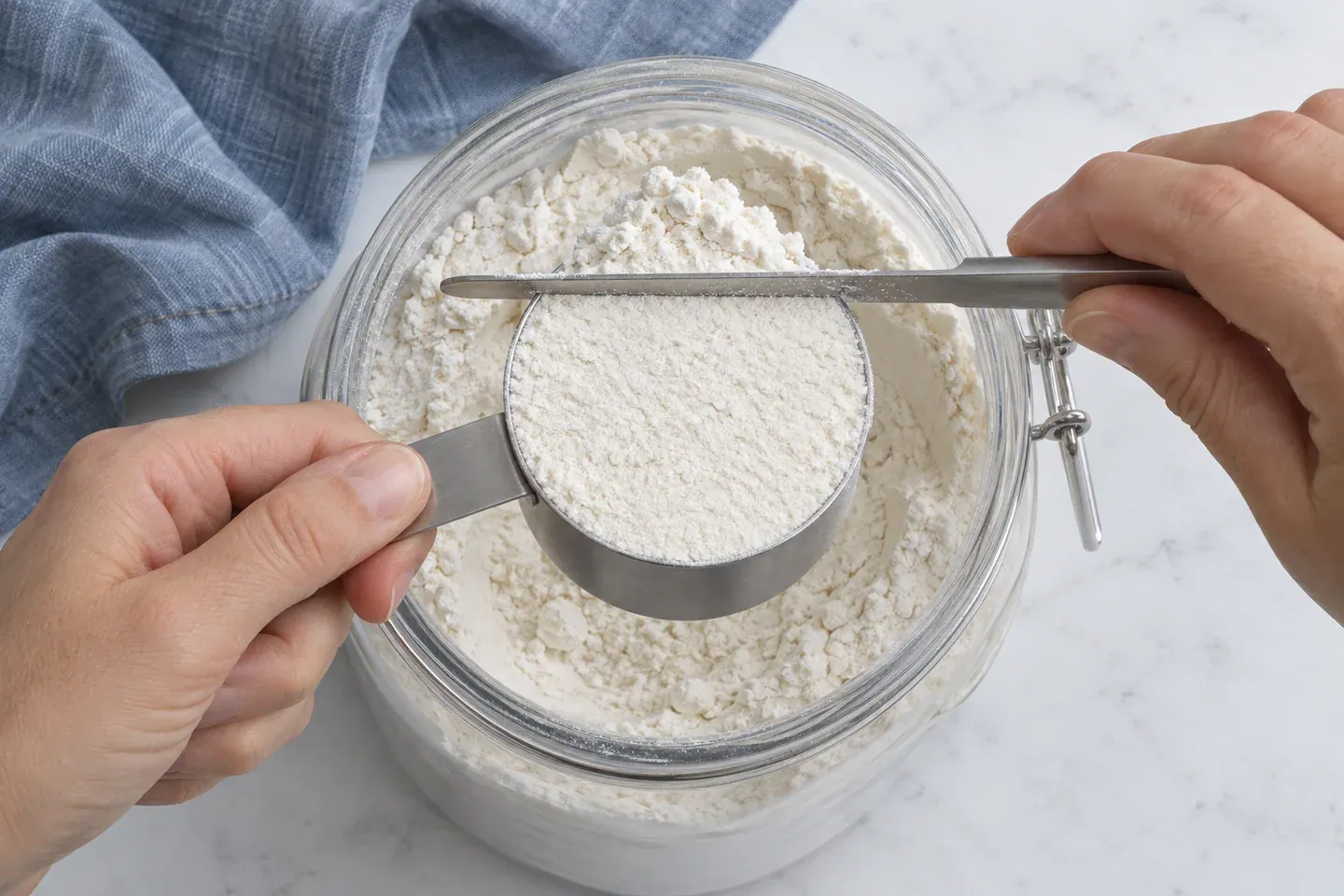
Loosen the flour gently in its storage container before measuring. Spoon it into the cup until it sits slightly above the rim. Do not tap, shake, or press it down. Draw a straight edge across the top to remove the excess, then transfer the measured flour into your bowl.
Repeat the same process for each cup rather than measuring one loosely and packing the next. For partial cups, use the appropriately sized dry cup if available. Guessing that a large cup is half full introduces another source of variation because its shape may make the visual midpoint misleading.
If a recipe specifies a different method, follow that method rather than assuming spooning is always what the author intended. Consistency with the recipe's development matters. However, when a recipe supplies grams, weighing avoids the need to infer how firmly the author filled a cup.
Understand the effect on dough hydration
Bakers express hydration as water weight divided by flour weight, multiplied by 100. With 500 grams flour and 325 grams water, the dough starts at 65% hydration. This number is a useful comparison tool, although milk, eggs, soaked grains, and other ingredients complicate the full picture.
Now suppose an inconsistent cup measurement adds 50 grams extra flour while the water stays at 325 grams. The calculation becomes 325 divided by 550, or about 59%. That is a meaningful change in the formula. The dough may feel firmer and require different handling even though the baker believes the recipe was followed exactly.
The example is a calculation, not a claim that every cup error equals 50 grams. It shows why small additions accumulate. The flour used to dust the counter also belongs in this picture: if much of it becomes incorporated during kneading, the dough's effective hydration falls further.
Do not chase a hydration percentage without considering flour type. Whole wheat flour may absorb water differently from a refined flour, and individual brands vary. The bread flour comparison gives context for those ingredient differences. Measurement helps you distinguish an actual formula change from a normal change in absorption.
Avoid correcting the dough too early
Newly mixed dough can look rough and stick to a spoon even when the flour quantity is correct. Give the flour time to hydrate before making a large adjustment. A short covered rest often provides more useful information than adding another cup immediately.
If the dough remains unexpectedly dry, review your measurements first. Did you select grams, tare the bowl, and add the full water quantity? Did a cup conversion come from the recipe itself? Those checks are more reliable than repeatedly adding water without knowing where the discrepancy began.
If it seems too wet, consider whether the recipe describes a loose dough or uses folds instead of countertop kneading. A high-hydration artisan dough is not supposed to behave like a firm sandwich loaf. Our hand-kneading guide explains when a different handling method is more appropriate.
Store and handle flour consistently
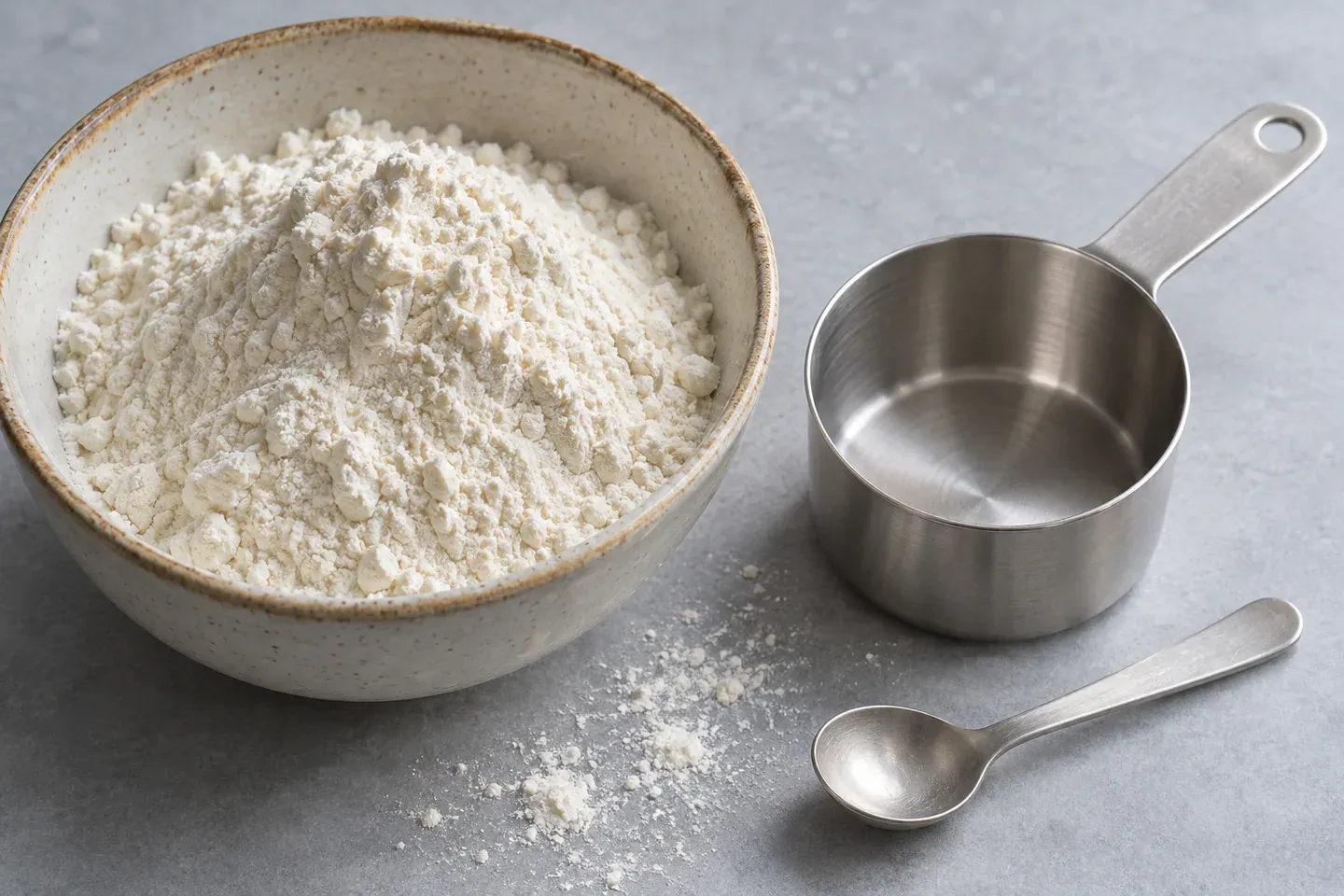
Keep flour protected from moisture, pests, and strong odors, following the package's storage guidance. A container should close securely but still allow you to loosen and spoon the flour without compressing it against a narrow opening. Label different flour types so that similar-looking powders are not confused.
Cold-stored flour can lower the temperature of the mixed dough. Weighing it accurately does not remove that temperature effect, so note the storage conditions if fermentation seems slower than usual. Do not assume that a correctly weighed dough must also rise on precisely the same schedule every day.
Handle flour as a raw ingredient. Avoid tasting dough or scattering flour where ready-to-eat food is being prepared. Wash hands and clean utensils after mixing, as described in the FDA's flour safety guidance. Accuracy and food handling are separate responsibilities; neither replaces the other.
A simple routine for the next loaf
Before you mix, read the ingredient list and choose one measurement system. Weigh flour, note the actual water quantity, and keep any counter dusting modest. If you change the formula during handling, record roughly what you added and why. A brief note can explain a result that otherwise seems mysterious.
After baking, wait until the loaf cools before judging its crumb. If it is too tight, compare the measuring notes with the dough's development and rise. The dense bread troubleshooting guide can help you avoid blaming flour measurement for a problem caused elsewhere.
The aim is repeatability, not laboratory perfection. When you know how much flour went into the bowl, you can make a deliberate change next time. That is more useful than treating every dough as a fresh guessing exercise.
Flour measurement questions
Should I sift flour before weighing it?
Sifting changes volume more than weight. If a recipe provides grams, weigh the specified amount and follow any separate sifting instruction. For cup measurements, the wording matters: flour measured before sifting and flour measured after sifting may occupy different amounts of space.
Can I use a mug instead of a measuring cup?
A household mug is not a standardized measure. If you must improvise, expect less predictable results and avoid presenting the outcome as a fair test of the recipe. A scale or a proper measuring cup makes subsequent attempts much easier to compare.
Is a small difference always a problem?
No. Ordinary bread dough tolerates some variation. The concern is a repeated or accumulated difference large enough to change its consistency. Weigh consistently, observe the dough, and make modest, recorded adjustments rather than trying to correct every gram after mixing.